Researcher in Communication & Media StudiesReligious Studies
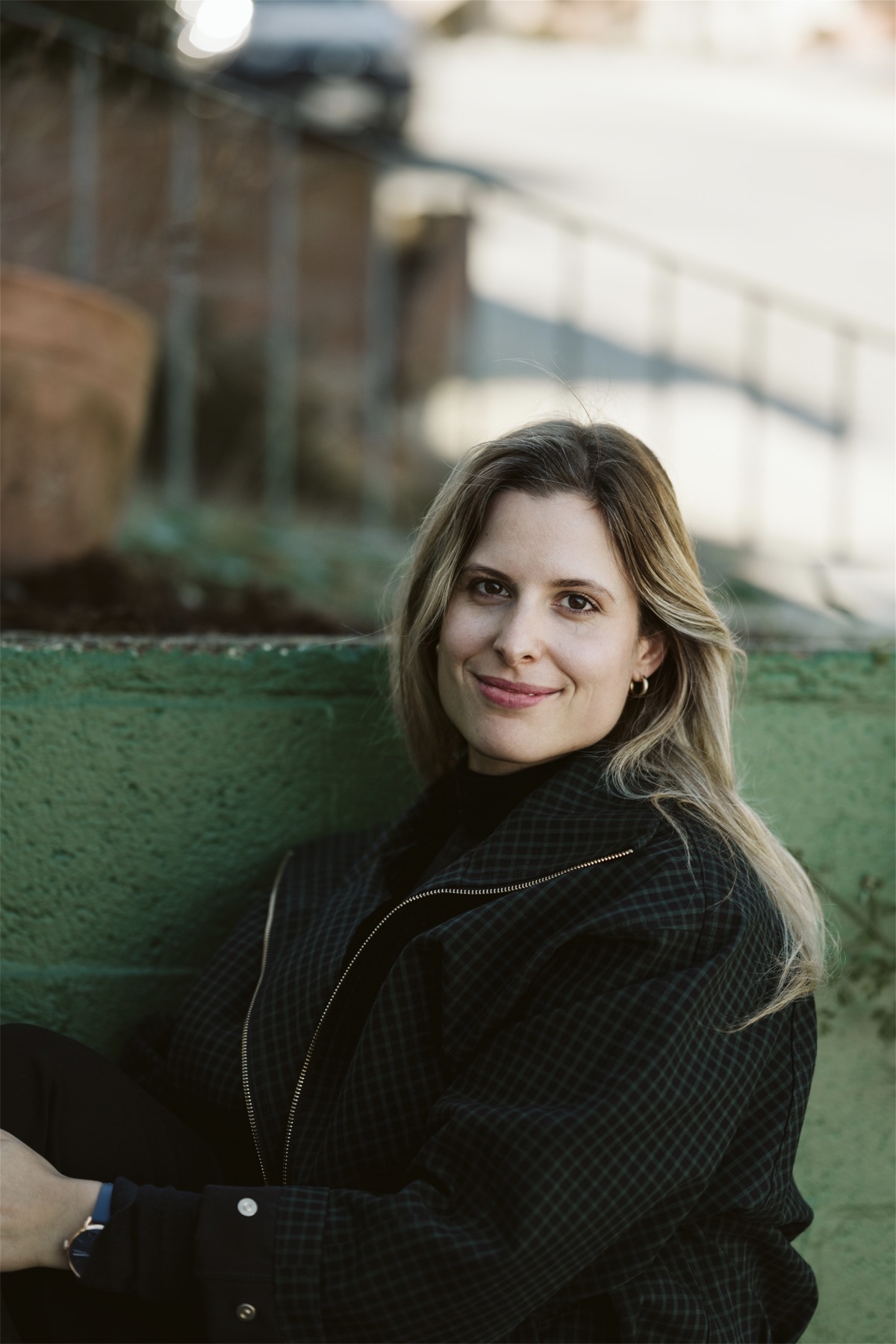
Hi, I’m Rebekka.
Exploring how digital media and information environments shape public narratives, meaning-making, and societal orientations, with a particular focus on religion and spirituality.
University of Zurich · Switzerland
Research Areas
Digital Publics & Information Environments
Digital platforms, journalism, and the dynamics of public communication.
Meaning-making & Cultural Narratives
Religion, spirituality, and collective identities, with a focus on the visibility, circulation, and recognition of cultural meanings.
Trust, Reputation & Public Opinion
Public perceptions and evaluations of institutions, social groups, and societal issues, and their relationships with media use and trust.
AI-Mediated Communication
Algorithmic mediation, generative AI, and their implications for information, meaning-making, and epistemic authority.
About & My Work
I am a postdoctoral researcher at the University of Zurich, working at the intersection of communication and media studies and religious studies. My research explores how public communication and digital media environments shape the circulation of narratives, the interpretation of cultural meanings, and the formation of societal orientations.
My academic background is in religious studies, where I initially examined how religious organizations negotiate legitimacy, institutional expectations, and collective belonging. My subsequent work in communication and media research has broadened this perspective to questions of public visibility, information use, trust, and the evaluation of institutions and social groups.
One central strand of my research examines how religious, spiritual, and broader cultural meanings circulate beyond explicitly religious contexts. Narratives about identity, gender, wellbeing, or belonging may draw on religious traditions without necessarily being recognized as religious. I am interested not only in which meanings become visible, but also in how they are interpreted, negotiated, and become consequential in people’s everyday lives.
Another central strand of my research focuses on the quality of public communication, disinformation, and media and AI literacy. I examine how information environments shape public understanding, trust, and the ability to critically engage with media content, particularly in the context of digital platforms and emerging technologies.
Across these strands, I am increasingly interested in how digital platforms, algorithmic mediation, and generative AI are transforming the ways information and cultural meanings are produced, encountered, interpreted, and evaluated.
Methods & Approaches
- Survey research & statistical modelling
- Qualitative interviews & thematic analysis
- Quantitative & computational content analysis
- Computational text & network analysis
- AI-assisted content analysis & coding validation
- Mixed-methods research designs
Publications & Talks
Selected Publications
- Rieser, R., & Eisenegger, M. (2026). Religious information repertoires in Switzerland’s hybrid information environment: Asymmetric associations with trust and reputation. Information, Communication & Society, 1–23. https://doi.org/10.1080/1369118X.2026.2750550
- Eisenegger, M., Vogler, D., Ryffel, Q., Fürst, S., & Rieser, R. (2026). Desinformation in der Schweiz: Problembewusstsein und Resilienz der Bevölkerung. In fög – Forschungszentrum Öffentlichkeit und Gesellschaft (Ed.), Jahrbuch Qualität der Medien 2026. Schwabe. https://doi.org/10.24894/978-3-7965-5664-7
- Reveilhac, M., & Rieser, R. (2026). A longitudinal study of media repertoires and political engagement in Switzerland. Swiss Journal of Sociology. https://doi.org/10.26034/cm.sjs.2026.6173
- Rieser, R., Eisenegger, M., & Schneider, J. (2026). The reputational configuration and dynamics of Christian churches in Switzerland. Journal for the Scientific Study of Religion. https://doi.org/10.1111/jssr.70025
- Rieser, R., Eisenegger, M., & Schneider, J. (2025). Digital public spheres: The role of media and other touchpoints in shaping Swiss church reputations. In T. Schlag & K. Yadav (Eds.), Religious Communication, Interaction and Transformation in a Culture of Digitality (pp. 243–260). De Gruyter. https://doi.org/10.1515/9783111721729-013
- Eisenegger, M., et al. (2025). Wissen ohne Nachrichten? Wie News-Deprivation mit Wissen, demokratie-relevanten Einstellungen und dem Informationsverhalten zusammenhängt. In fög – Forschungszentrum Öffentlichkeit und Gesellschaft (Ed.), Jahrbuch Qualität der Medien 2025 (pp. 29–50). Schwabe. https://doi.org/10.24894/978-3-7965-5366-0
- Udris, L., & Rieser, R. (2025). Einstellungen gegenüber Medien. In fög – Forschungszentrum Öffentlichkeit und Gesellschaft (Ed.), Jahrbuch Qualität der Medien 2025 (pp. 115–120). Schwabe. https://doi.org/10.24894/978-3-7965-5366-0
- Rieser, R., Vogler, D., & Eisenegger, M. (2025). Religion(s) in Swiss newspapers: A longitudinal analysis of salience and topics from 1998 to 2022. Journalism. https://doi.org/10.1177/14648849251352633
- Rieser, R. (2024). Kroatisch, katholisch, konservativ: Institutionelle Erwartungen an und Legitimität von kroatischen Missionen in Deutschland und der Schweiz. transcript Verlag. https://doi.org/10.14361/9783839472309
- Fürst, S., & Rieser, R. (2024). Einstellungen gegenüber Medien. In fög – Forschungszentrum Öffentlichkeit und Gesellschaft (Ed.), Jahrbuch Qualität der Medien 2024 (pp. 97–103). Schwabe. https://doi.org/10.24894/978-3-7965-5200-7
- Fürst, S., & Rieser, R. (2023). Einstellungen gegenüber Medien. In fög – Forschungszentrum Öffentlichkeit und Gesellschaft (Ed.), Jahrbuch Qualität der Medien 2023 (pp. 143–150). Schwabe. https://doi.org/10.5167/uzh-238608
- Udris, L., Rivière, M., Rieser, R., Vogler, D., & Eisenegger, M. (2023). Reuters Institute Digital News Report 2023: Länderbericht Schweiz.
Selected Conference Presentations & Invited Talks
- Rieser, R. (2026, September). Reframing religious visibility: A multidimensional model of decodability and visibility in digital public spheres. European Association for the Study of Religions (EASR), Bucharest, Romania.
- Rieser, R. (2026, September). Visible and invisible religion in platformed publics: Mapping Instagram hashtag networks in the Anglo-American sphere. European Communication Research and Education Association (ECREA), Brno, Czech Republic.
- Reveilhac, M., & Rieser, R. (2026, September). Simulating alternative and traditional media influence in a fragmented digital landscape. European Communication Research and Education Association (ECREA), Brno, Czech Republic.
- Rieser, R. (2025, October). From cues to consequences: (In)visible religion in digital media and its impact on young adults in democracy. Invited guest lecture, Boston College, USA.
- Rieser, R., & Reveilhac, M. (2025, August). Platformed or hybrid impact on public evaluation of Christianity and Islam in the digitized public sphere. International Conference on Media, Religion and Culture (ISMRC), Boston, USA.
- Rieser, R. (2025, August). The “green element” of religion(s): Digital visible and invisible religion(s) around climate and environment in the Swiss public sphere. International Conference on Media, Religion and Culture (ISMRC), Boston, USA.
- Rieser, R., Vogler, D., & Eisenegger, M. (2024, September). The construction of religion in Swiss news media: A longitudinal analysis from 1998 to 2022. European Communication Research and Education Association (ECREA), Ljubljana, Slovenia.
Research Projects & Exchanges
Selected Research Projects
Religion and Spirituality in Post-Digital Resonance Spheres
Interdisciplinary research on how religion and spirituality are shaped by technological change, public communication, and societal transformations, with a focus on authority, legitimacy, community, and religious visibility.
Cluster pageThe Reputational Configuration of Religion and Religious Communities in the Post-Digital Public Sphere
Research on how journalistic media, digital platforms, interpersonal encounters, and personal experiences shape the public reputation, legitimacy, and evaluation of religious traditions and communities.
Project pageAll Fake – or What?
Research and knowledge transfer on digital information environments, disinformation, and AI and media literacy, including the development of research-based educational resources.
CheckNews educational resources
Research Exchanges
Boston College
Research exchange on religious visibility and decodability in digital publics, including Instagram-based research, qualitative approaches, and interdisciplinary collaboration on religion, media, and cultural meaning-making.
Swissnex San Francisco
Research exchange and engagement with academic and educational communities on digital communication, disinformation, and AI and media literacy, connecting research with educational practice.
Public Engagement
TV / documentary · 2026
SRF Impact — Bible Study statt Party: Comeback des Christentums bei der Gen Z?
Documentary contribution on Christianity among young adults, religious identities, and the role of social media.
Watch on SRF PlayRadio · 2026
SRF 3 & Echo der Zeit — Radio Interviews
Interviews on young adults, religion, TikTok, and changing religious practices.
Public-facing article · religion.ch · 2026
Religion im digitalen öffentlichen Diskurs: Was wird eigentlich diskutiert – und von wem?
An accessible discussion of religion and public communication in digital environments.
Read BlogScience communication / video · 2025
Science Chat CheckNews
A video series connecting research on media and society with questions relevant to everyday information use.
Watch on YouTubePublic research · 2024–present
Religion Topic Monitor
Making research on religion in public communication accessible to wider audiences.
View MonitorExhibition · 2023
Staying Resilient — How Do We Consume Information in Digital Times?
An exhibition exploring information consumption and resilience in digital environments.
Teaching
My teaching focuses on digital media, public communication, religion, and societal change. In my seminars, I encourage students to connect theoretical perspectives with empirical research and to critically examine how media environments shape public discourse, identities, and everyday practices.
I place particular emphasis on research-based learning, methodological reflection, and supporting students in developing their own research questions and analytical approaches.
Selected Courses
From Populism to Well-being: Religion, Spirituality, and Media in Times of Societal Ruptures
Religion and Religious Discourse in the Digitized Public Sphere
God Enters the Chatroom: Characteristics and Effects of Religion and Social Media
Affiliations & Background
Affiliations
- Department of Communication and Media Research (IKMZ)University of Zurich
- Research Center for the Public Sphere and Society (fög)University of Zurich
- University Research Priority Program Digital Religion(s)University of Zurich
Academic background
- PhD in Religious StudiesUniversity of Lucerne
Contact
For research exchange, academic collaboration, media inquiries, or science communication.
- Email[email protected]
- Google Scholar
- ORCID0009-0009-3757-2014
- ResearchGate